
Dealing with mould stains in your rental home? This is one of the most challenging situations for both tenants and landlords, especially at the end of a tenancy. These are common fungi that love to grow in dark, moist and humid areas, such as bathrooms, tile grout, basement walls, etc. Mould infestation not only negatively impacts your property’s value but also poses various health concerns.
Under WA tenancy laws, if the tenant reports a mould stain in a timely manner, landlords are responsible for fixing it because it can cause respiratory problems. However, if these black spores are caused by the tenant’s negligence, then they are liable to remove them before the final move out. In both scenarios, tenants need to act quickly.
Fret not! Today, we bring you easy and effective ways to combat mould stains before the final rental inspection. Make sure you thoroughly inspect the property and identify the root cause before remediation.
Let’s Get Started!
- What are the Common Causes of Mould Infestation?
- Banishing Mould with White Vinegar: An Effective Solution
- Tea Tree Oil: A Natural Mould Removal
- Baking Soda for Mild Mould Stains
- Vodka: A Surprising Cleaning Product
- Hydrogen Peroxide: The Best Mould Remover
- When to Hire Professionals?
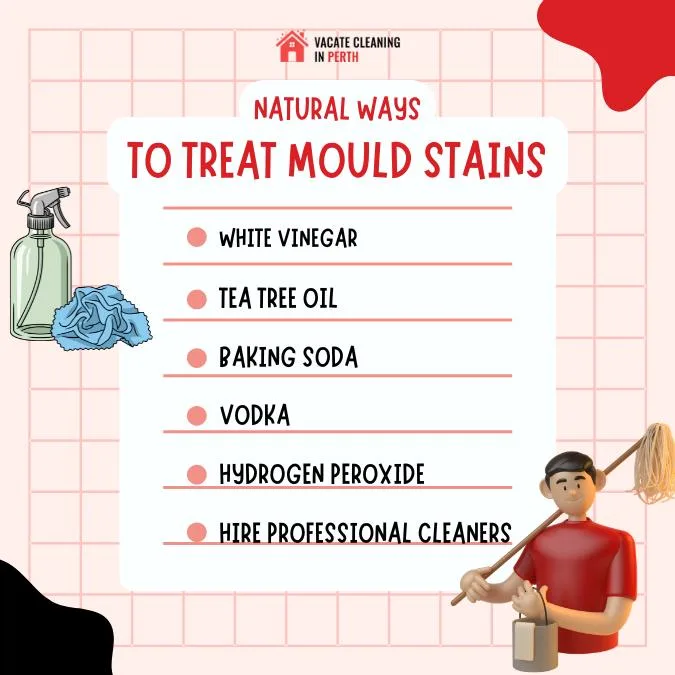
- Infographic For Natural Ways To Treat Mould Stains
- Wrapping Up
1. What are the Common Causes of Mould Infestation?
Is your home filled with musty or rotten odour? Are you coughing or sneezing more frequently indoors? These could be the signs of mould growth. Here are some of the common causes of the problem:
- Excess moisture
- High humidity levels indoors
- Plumbing issues, like leaked pipes or faucets
- Leaking roof
- Poor ventilation
- Fault air condition
Professional vacate cleaning Perth experts recommend fixing the root cause of mould infestation before eliminating stains. For instance, repairing faulty taps and pipes, controlling humidity levels, cleaning carpets and rugs, and soaking excess liquid from carpets using a paper towel. This will keep the property healthy and hygienic, leaving a great impression on your landlord.
Below are natural ways to treat mould stains like a pro:
2. Banishing Mould with White Vinegar: An Effective Solution
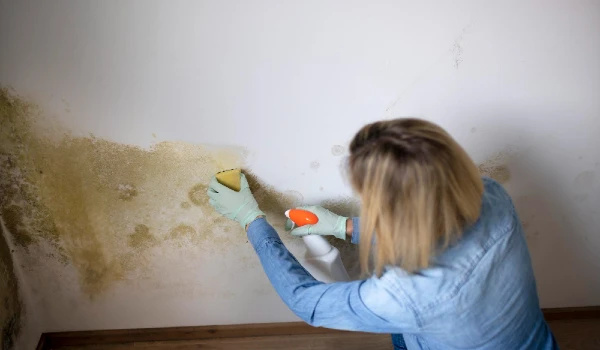
Instead of buying store bought mould removal sprays, access your kitchen pantry and grab a bottle of white vinegar. It’s an acidic agent that effectively breaks down mould spores without damaging the surface.
You can dilute white vinegar with warm water and spray it on affected areas like painted walls, carpets and upholstery, bathroom showers, glass surfaces and other surfaces. Leave the solution on the mould for at least an hour, then scrub with a soft bristled brush to prevent damage.
Tip: Mix a teaspoon of lemon juice and dishwashing soap to banish black mould effectively.
3. Tea Tree Oil: A Natural Mould Removal
Did you know that tea tree oil has been used as traditional medicine by Aboriginal community in Australia? It has been used as a natural remedy for coughs, colds, and skin allergies. The oil is derived from the leaves of Melaleuca alternifolia, a small tree native to Australia.
In modern days, professionals use tea tree oil to treat mould and mildew stains. The antibacterial and antibiotic properties of this oil can effectively kill common bacteria, viruses and fungus from almost all surfaces.
Add 2 teaspoons of tea tree oil to at least 1 bowl of warm water, then spray the solution onto mould stains. Let it sit for 10 to 20 minutes before scrubbing or wiping the stains away. The best part is that it can freshen up your home as well.
4. Baking Soda for Mild Mould Stains
Apart from being a natural degreaser and disinfectant, baking soda can do wonders in banishing mild mould and mildew spores. It can effectively neutralise musty odours from moist and damp surfaces. Professionals also carry baking soda for a guaranteed vacate cleaning Perth without polluting the indoor air.
Make sure you dissolve baking soda in warm, soapy water, then spray the solution onto the stained area. Leave it for a few minutes, or scrub with an old toothbrush for spotless results.
Fact: Baking soda is also a great alternative to bleach for toilet cleaning.
5. Vodka: A Surprising Cleaning Product
Believe it or not! Vodka can be used for more than just mixing and making cocktails. It contains about 40% ethanol, which has antifungal and antibacterial properties. It not only breaks down the mould's cell structure but also prevents regrowth.
You can simply spray vodka onto the mould and leave it for a few minutes, then scrub it with a damp cloth. You can use it on wooden surfaces, tiles, walls, etc. However, it is always a good idea to test it in a hidden area to prevent damage.
6. Hydrogen Peroxide: The Best Mould Remover
This is undeniably one of the most effective agents to eliminate mould and mildew from almost all surfaces. Hydrogen peroxide has been used to disinfect wounds and even surfaces. Its anti bacterial properties work effectively in banishing unpleasant black spores.
Make sure you use 3% hydrogen peroxide and spray it on affected areas, such as tiles and grout lines, to achieve spotless results. You can scrub the area with an old toothbrush.
Tip: Rinse the area with plain water and air dry completely to prevent regrowth.
7. When to Hire Professionals?
If all your DIY efforts fail, you must consider hiring seasoned experts to tackle mould and mildew. You can include mould removal as an add on service with a professional vacate cleaning and impress your fussy landlord. They come equipped with all the necessary supplies and implement proven techniques to achieve the best results. Make sure you click time stamped photos before and after cleaning to handle cleaning disputes. This can help you secure your full bond.
Infographic For Natural Ways To Treat Mould Stains
Wrapping Up
These are some of the most effective and chemical free ways to combat mould and mildew from dark, damp and moist surfaces. Make sure you inspect your rental home and pay special attention to mouldy areas when preparing your property for the final end of lease inspection to secure your rental bond.