Understanding Western Australia's residential tenancy laws is critical to preventing unfair bond deductions and penalties. Most tenants/renters in Perth are unsure what is included in fair wear and tear when moving out of a rental property.
Landlords or property managers generally cannot deduct money for damage caused by normal or everyday use. As a responsible tenant, it is important to understand the difference between fair wear and tear vs actual damage to avoid awful disputes at the end of a tenancy.
In today’s guide, we’ll help you understand what fair wear and tear is in WA tenancy laws, who is responsible for fixing damage and how to protect your bond due to unfair deductions. This enables you to book seasoned professionals for a guaranteed vacate cleaning Perth for a stress free move out experience.
Let’s Get Started!
- What is Fair Wear & Tear in WA Tenancy Laws?
- What are the Examples of ‘Fair Wear & Tear’?
- Understanding Actual Property Damage Under Tenancy Laws
- Landlords vs. Tenants: Who is Responsible for Fixing Damage?
- What are your Rights as a Tenant under WA Tenancy Laws
- How to Avoid Unfair Bond Deductions for Fair Wear and Tear
- Important Tips for Tenants to Secure Bond Money
- Bonus Point: How Can Landlords in WA Stay Legally Compliant?
- Infographic For Understanding Fair Wear and Tear Under WA Tenancy Laws
- Wrapping Up
1. What is Fair Wear & Tear in WA Tenancy Laws?
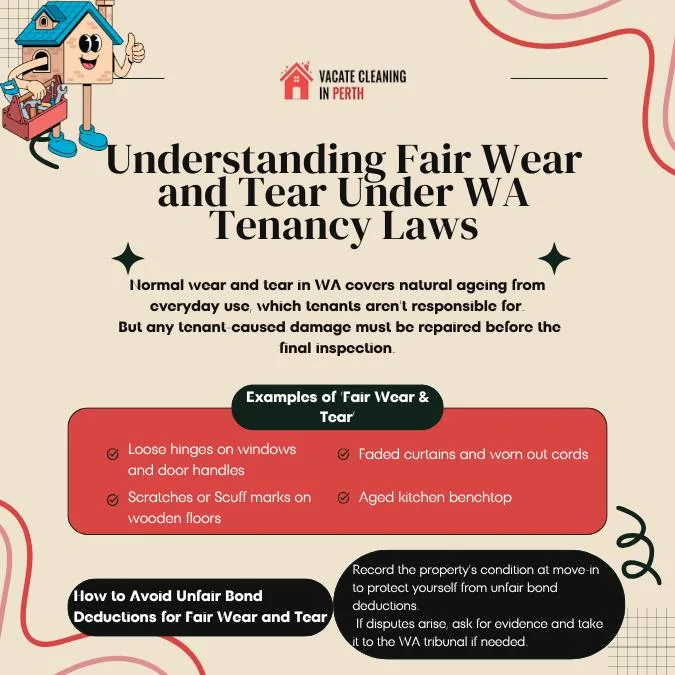
In Western Australia, the residential tenancy laws clearly define ‘normal wear and tear’ as a gradual decline in the property's condition due to normal use.
In fact, tenants are expected to return the property in a 'reasonably clean' condition except for normal wear and tear. This means tenants are not responsible for fixing issues caused by ordinary use and the natural deterioration of the property throughout a lease.
However, if tenants have been negligent or intentionally caused damage to the property during their tenancy, they are liable for repairs for the final rental inspection.
2. What are the Examples of ‘Fair Wear & Tear’?
Reasonable wear and tear is considered to be changes that occur during the normal use of the premises, including fixtures and fittings. To help you better understand it, here are some real examples:
- Loose hinges on windows and door handles
- Faded curtains and worn out cords
- Scratches or Scuff marks on wooden floors
- Faded and chipped paint
- Aged kitchen benchtop
- Cracks in the wall
- Water marks on carpets due to rain or water seepage
- Worn sliding tracks
There is no denying that this level of deterioration on a rental property will occur over time. Landlords should expect it when conducting a thorough inspection. However, tenants should ensure that they don't cause any serious damage to the property. This could lead to bond deductions and hefty penalties.
3. Understanding Actual Property Damage Under Tenancy Laws
Tenants often fail to understand the basic difference between normal wear and tear vs. actual damage and thus, end up losing their hard earned bond money. So, before hiring vacate cleaning Perth professionals for dirt and grime, know what counts as actual or major property damage:
- Torn or missing curtains
- Burn marks or stubborn stains on the carpet
- Intentionally scratched or gouged wooden floors
- Broken windows and door glass
- Damage to the wall paint while removing adhesive posters and decoration pieces
Landlords have the right to withhold your bond money if the property is in damaged condition.
4. Landlords vs. Tenants: Who is Responsible for Fixing Damage?

Under the Residential Tenancy Act (1987) in Western Australia, a leased property must be restored to a clean and habitable condition (excluding fair wear and tear). It should be in the same state as when you moved in. That also means major damage to the premises needs to be fixed to prevent further structural damage. When it comes to restoration, both landlords and tenants share serious responsibilities.
Renters are responsible if a property is damaged beyond normal wear and tear. It is often caused by the tenant's negligence, misuse or intentional acts during a tenancy. They must seek permission from their property managers before fixing any damage.
Landlords or property managers are also responsible for fixing structural damage and other critical matters related to the property. They are responsible for fixing damaged roofs, decks, leaking taps, and clogged gutters. This keeps their investment property viable for years, ensuring consistent rental income.
5. What are your Rights as a Tenant under WA Tenancy Laws
You have a right to expect your full bond back at the end of your lease, unless there is proof of damage, substandard cleaning, unpaid rent, or missing items under your rental agreement.
You have a right to dispute the claim if a landlord unfairly deducts your bond. However, it is essential to fulfil all your duties and responsibilities, thoroughly clean every nook and cranny and maintain a tidy property for pristine shine.
6. How to Avoid Unfair Bond Deductions for Fair Wear and Tear
As a responsible tenant, it is always good to thoroughly inspect the property before signing a Property Condition Report. It is a document that outlines the current condition of a property.
Make sure you document evidence, such as photos and videos, when moving into a property. You can compare it with the current condition before the final move out to detect existing damage or dirt.
If the landlord asks for an unfair deduction, you have the right to dispute the claim. You can ask your landlord to provide evidence of the damaged area or spot, receipts for repair work, etc.
If the dispute remains unresolved, you or the property manager can apply to the State Administrative Tribunal of WA. They will make the final decision on bond refund based on the evidence provided by you and the landlord.
7. Important Tips for Tenants to Secure Bond Money
Below are some of the essential tips and tricks to help you secure a full bond without any dispute or disagreement:
- Carefully read your cleaning obligations in your rental agreement before getting into the lease.
- Click time- stamped photos and videos as evidence.
- Maintain a clean and tidy property throughout your lease. Remove dirt, grime, clutter and stubborn stains from almost all surfaces.
- Use eco friendly products and non abrasive tools to clean delicate surfaces to prevent permanent damage.
- Refer to the property condition report because you are not liable for pre existing damage
- In case of any structural damage, immediately inform your landlord
- Fix the major damage caused by you upon approval
- Hire highly trained vacate cleaning Perth professionals for room by room cleaning. They clean according to a pre approved checklist to clean every inch of the property with precision
- You must attend the final rental inspection
8. Bonus Point: How Can Landlords in WA Stay Legally Compliant?
Landlords or property managers can also avoid rental disputes by setting clear legal processes and maintaining the property to a habitable condition. Regular or routine inspections play a pivotal role in addressing issues early, while prompt repairs show the renter that the property is being well maintained.
It is also essential to document everything, including the inspection reports, photos and maintenance invoices, to prevent disputes. Also, communicate early with a tenant and encourage them to adhere to their responsibilities. As a responsible landlord, ensure you charge only for genuine damage beyond fair wear and tear. These practices help you stay legally compliant while reducing the risk of penalties and tribunal claims.
Infographic For Understanding Fair Wear and Tear Under WA Tenancy Laws
Wrapping Up
Knowing your duties and responsibilities as a tenant in WA not only prevents unnecessary disputes but also maintains the structure of a property and tenant's hard earned bond money. Under WA tenancy laws, tenants must return a property in a clean condition, except for fair wear and tear. At the same time, landlords are required to provide a habitable property to a new occupant. So, know your responsibilities and prevent conflict for hassle free bond retrieval.